Proving Love to the Government: A Complete Guide to the Visa Interview Process for International Couples
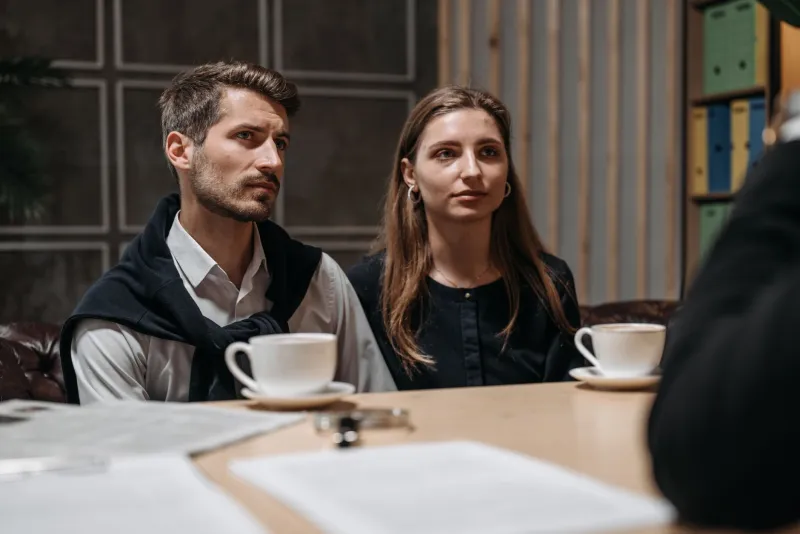
For American men who have invested months or even years in an international relationship, the visa interview can feel like the most daunting obstacle yet. You have navigated time zones, language barriers, and the emotional complexity of long-distance love. Now you must convince a government official — often in a matter of minutes — that your relationship is authentic, legally sound, and not a vehicle for immigration fraud.
This is not a moment to improvise. Preparation, documentation, and a clear understanding of what consular officers are trained to look for will determine whether your partner walks out of that interview with an approved visa or a denial notice.
Understanding What the Interview Is Actually Evaluating
The United States Citizenship and Immigration Services (USCIS) and the Department of State's consular officers are specifically trained to identify relationships that exist primarily for immigration benefit rather than genuine romantic intent. This does not mean they assume the worst — but it does mean they approach every interview with a structured skepticism.
Officers are evaluating several core questions: Have the two of you spent meaningful time together in person? Does each partner demonstrate independent knowledge of the other's life, habits, and history? Are the timelines of the relationship consistent with the documents provided? And perhaps most critically, does the story each of you tells match the other's account?
Understanding this framework should shape every aspect of your preparation.
Building Your Documentation File
One of the most practical things you can do well before the interview date is to compile a comprehensive relationship evidence file. This is not about manufacturing a story — it is about organizing the genuine history you have already created together.
Your file should include:
- Communication records: Screenshots or printed logs of messages, emails, and video call histories spanning the full duration of the relationship. Platforms such as WhatsApp, Facebook Messenger, and Skype typically allow export of message history. Timestamps matter enormously here.
- Financial records of contact: Wire transfers, international money transfers (where applicable), or receipts for gifts sent through international shipping services.
- Travel documentation: Boarding passes, hotel reservations, and passport stamps from any in-person visits. Even a single meeting significantly strengthens a case.
- Photographs: Dated, varied, and contextual. Photos taken in different locations, with other people present, and across different seasons demonstrate an ongoing and evolving relationship rather than a staged photo session.
- Third-party correspondence: Messages or letters from family members or mutual friends who are aware of the relationship and can speak to its authenticity.
Organize all of this chronologically and create a clear index. Consular officers appreciate applicants who present materials in an orderly, accessible format.
Preparing for the Hard Questions
Both you and your partner should be prepared to answer questions independently, and your answers must align without sounding memorized. The distinction between rehearsed and prepared is subtle but important.
Common lines of questioning include:
- How did the two of you meet, and on what platform or through what circumstances?
- When was your first in-person meeting, and who traveled to whom?
- Describe a typical day in your partner's life — their job, their routine, their family situation.
- What are your partner's hobbies, dietary preferences, or religious practices?
- What are your future plans as a couple after the visa is approved?
Practice answering these questions separately and then compare your responses. Where there are gaps or inconsistencies, discuss them openly and correct your understanding of each other's lives. This is not coaching each other to lie — it is ensuring that two people who genuinely know each other can demonstrate that knowledge under pressure.
Recognizing USCIS Red Flags (So You Can Proactively Address Them)
Certain patterns raise immediate concern for immigration officials. Being aware of them allows you to address potential vulnerabilities before they become problems.
Significant age gaps are frequently scrutinized, particularly when the foreign-born partner is substantially younger. This does not disqualify a relationship, but it does require stronger contextual evidence of genuine compatibility.
Short courtship timelines — particularly relationships that moved quickly from initial contact to a visa petition — draw scrutiny. If your relationship developed rapidly, be prepared to explain the circumstances that made that timeline feel natural and appropriate.
No in-person meetings prior to the visa application is one of the most significant concerns. If travel was genuinely impossible due to financial or logistical reasons, document those barriers clearly.
Inconsistencies in the stated meeting story — even minor ones — can undermine an otherwise solid application. Make sure both partners are telling the same truthful account.
Aligning Your Narratives Without Appearing Scripted
There is an important difference between two people who know each other deeply and two people who have memorized a script. Officers are trained to detect the latter. Answers that are too polished, too identical, or delivered with robotic precision can actually work against you.
The goal is natural consistency. You should agree on the essential facts — dates, locations, how you met — while allowing room for each person to describe shared experiences in their own words and from their own perspective. Two people who genuinely love each other will naturally have slightly different memories of the same events, and that is not a weakness. It is evidence of authenticity.
Consider doing a practice run where you each answer a list of likely questions without consulting each other first, then review together. This process will reveal where your knowledge of each other's lives needs deepening — and that deepening is itself a valuable part of the relationship.
A Note on Legal Counsel
For couples navigating complex circumstances — prior visa denials, significant age differences, very short courtship periods, or situations involving prior marriages — consulting an immigration attorney before the interview is strongly advisable. An experienced attorney can review your documentation, identify vulnerabilities, and help you present your case in its strongest possible form. This is not an admission of weakness. It is a recognition that immigration law is specialized, consequential, and worth professional guidance.
The Interview Day Itself
On the day of the interview, your partner should arrive with all original documents and organized copies. They should be well-rested, calm, and prepared to answer questions directly and honestly. Nervousness is normal and generally understood by officers — but evasiveness, contradictions, or an inability to answer basic questions about the American partner's life will raise concerns.
Remind your partner that the interview is not an interrogation designed to trap them. It is a structured conversation designed to verify what you have already documented. If the relationship is genuine — and if you have prepared thoroughly — there is every reason to approach that conversation with confidence.
The visa process is one of the most challenging chapters in an international love story. But for couples who have built something real across borders, it is also one of the most meaningful milestones — a moment when your relationship is formally recognized as worth crossing every barrier to preserve.