Stop Treating Her Visa Like the Finish Line—Your Relationship Needs More Than That
There's a moment a lot of guys in international relationships know well. You've submitted the forms, paid the fees, waited through the interviews, and finally—finally—you get the approval. And for a split second, you feel like you've won something.
But won what, exactly?
If you've been laser-focused on immigration outcomes from day one, there's a real chance you've been building toward the wrong goal. The visa isn't the destination. It's more like the door. And what's behind that door—the actual relationship you're walking into together—depends almost entirely on work that has nothing to do with government paperwork.
When the Paperwork Becomes the Relationship
Here's something that doesn't get talked about enough in international dating circles: a lot of couples accidentally let immigration become the relationship.
Think about it. You meet someone abroad or online. The connection feels real. Then almost immediately, the conversation shifts to logistics. K-1 visas. Petition timelines. Affidavit of support requirements. Before long, every phone call has an agenda, every email has a subtext of are we moving forward or not, and the emotional intimacy that should be deepening is quietly getting crowded out by bureaucratic stress.
Men who've been through this describe a strange feeling after their partner finally arrives. They expected relief, joy, a kind of homecoming. Instead, they felt... distant. Like they'd spent a year managing a project together rather than falling in love.
That's not a coincidence. It's what happens when you optimize for logistics instead of connection.
What 'Building Something Together' Actually Looks Like
The couples who seem to make it—genuinely make it, not just legally but emotionally—tend to have one thing in common: they treated the long-distance phase as relationship-building time, not just a waiting room.
That looks different for everyone, but some patterns show up consistently.
They fought about real things. Sounds strange, right? But couples who never navigated any conflict before she arrived often hit a wall fast once the honeymoon phase fades. The couples who argued about small stuff—whose family expectations were going to take priority at Christmas, how money would be handled, what 'space' means to each of them—arrived at cohabitation with some emotional muscle already developed.
They talked about life, not just the process. There's a difference between discussing what documents she needs to gather and discussing what kind of life you both actually want. The second conversation is scarier, more vulnerable, and infinitely more important. Couples who had it early built something that immigration couldn't create for them.
They let her be a full person, not a pending arrival. This one's subtle but it matters. When a man is fixated on 'getting her here,' he can start relating to his partner as someone in transit—someone whose real life begins upon arrival. That framing quietly strips her of agency and presence. The men who do it differently stay genuinely curious about her current life, her friendships, her daily frustrations, her ambitions that exist entirely independent of him.
The Irony Nobody Mentions
Here's the twist: couples who prioritize emotional investment over immigration timelines often have smoother immigration experiences.
Not because love magically speeds up the USCIS, but because their relationship can withstand scrutiny. Consular interviews, requests for evidence, secondary processing—all of these become less stressful when you're a couple who actually knows each other deeply. You're not scrambling to manufacture intimacy for an officer's benefit. You already have it.
Beyond that, couples who've done the emotional work are less likely to panic when delays hit. And delays always hit. If your entire sense of relationship progress is tied to government timelines, every setback feels like your relationship is failing. If you've been building genuine closeness in parallel, a six-month delay is frustrating, not devastating.
What to Actually Focus On Instead
So if the visa isn't the goal, what is? Here's a reframe that tends to help:
The goal is becoming the kind of couple who can build a life together. Everything else—the paperwork, the flights, the apartment hunting—is in service of that, not the other way around.
Practically, that means:
-
Have the hard conversations early. Money, family roles, religion, kids, career ambitions. Don't save these for after she arrives because you think they'll 'sort themselves out.' They won't.
-
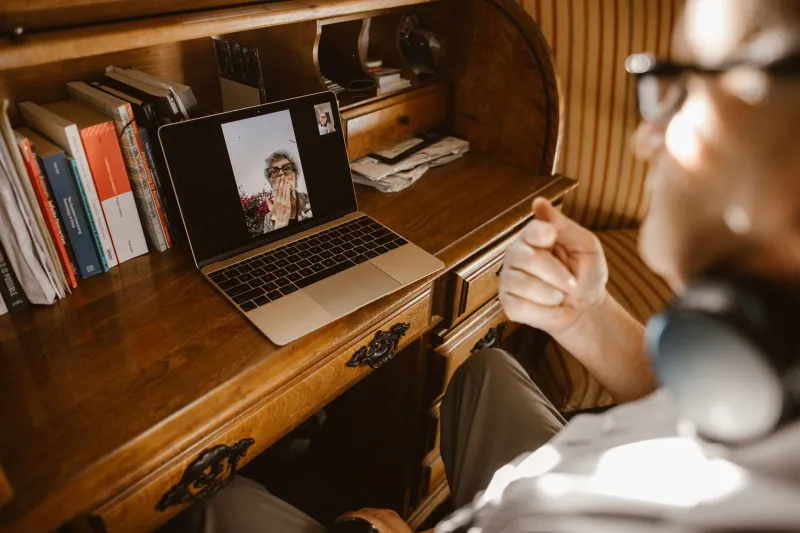
Create shared experiences across the distance. Watch the same movie and debrief it together. Cook the same recipe in different kitchens on a video call. Read the same book. These aren't just cute ideas—they're the raw material of a shared inner world.
-
Check in on how she's doing, not just how the process is going. She's navigating her own emotional complexity during this time—anticipatory anxiety, family pressure, cultural uncertainty about what her American life will look like. Ask about that. Be curious about it.
-
Let yourself be known, too. International romance has this funny dynamic where men sometimes feel like the 'stable' party—the one with the house, the job, the country. That can make it easy to stay surface-level about your own vulnerabilities. Don't. She needs to know who she's actually moving her life toward.
The Relationship That's Already Happening
Here's maybe the most important reframe of all: your relationship isn't on pause until she lands at JFK or LAX. It's happening right now, in every conversation, every disagreement, every moment of patience or impatience, every time you show up or don't.
The couples who understand this arrive at the arrival gate differently. They're not meeting a stranger they've been corresponding with. They're not completing a transaction. They're continuing something they've already been building—something that has texture and history and, yes, some scar tissue too.
That's a real relationship. That's the thing worth working toward.
The green card is just paperwork. What you build together—before, during, and long after the immigration process is done—that's the whole point.