When Words Fall Short—And Why That Might Be the Best Thing for Your Relationship

Here's a thought that might make you pause: What if the thing you're most worried about in international dating—the language gap—is actually working in your favor?
I know. It sounds counterintuitive. We live in a culture that prizes articulate communication, witty banter, and the ability to express yourself with precision. The idea that not being able to find the right word could somehow deepen a connection feels almost absurd. And yet, ask anyone who's navigated a serious relationship across a language divide, and you'll hear something surprising—the struggle to communicate often becomes one of the relationship's defining strengths.
This isn't wishful thinking. There's genuine psychological substance behind it.
The Myth of "Perfect Communication"
Let's start by questioning the assumption. We tend to believe that fluent, effortless communication is the gold standard of intimacy. But is it? Think about how many couples—same language, same city, same cultural background—completely fail to understand each other. Shared vocabulary doesn't guarantee emotional connection. In fact, it can create a false sense of understanding, a kind of conversational shorthand that bypasses the deeper work of actually knowing someone.
Language barriers strip that shorthand away. You can't rely on clever phrasing or rehearsed answers. You have to slow down. You have to mean what you say, because saying it takes real effort. And your partner has to work just as hard to receive it.
There's a term in psychology called "effortful processing"—the idea that when our brains work harder to understand something, we remember it more deeply and value it more. Applied to relationships, this means that a conversation you had to fight for—where you used gestures, translation apps, broken phrases, and patient repetition—can leave a deeper impression than a hundred easy exchanges.
What Couples Actually Say
Mark, a 38-year-old software developer from Austin, met his now-wife Natalia through an international dating platform. Natalia, originally from Kyiv, spoke intermediate English when they first connected. Mark spoke approximately zero words of Ukrainian.
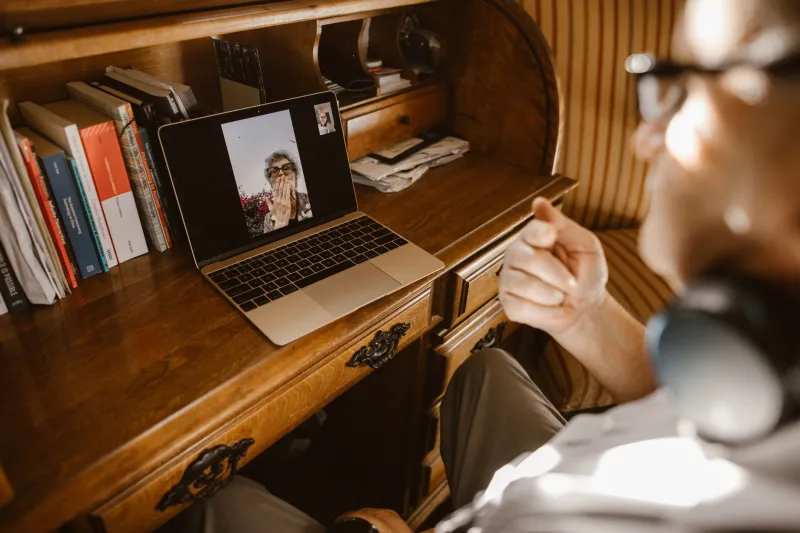
"The first few months were honestly hilarious," Mark said. "We'd be on video calls and she'd pull up Google Translate mid-sentence, hold it up to the camera, and I'd do the same. We laughed constantly. But something about that—the goofiness of it, the shared effort—it felt really intimate. Like we were building our own private language."
Natalia, now living in Austin with Mark, describes those early months differently but arrives at the same conclusion. "When you cannot say a word, you must show it. He would find photos, draw things, act things out. I learned so much about who he was from how he tried to explain himself. More than words could tell me."
That phrase—"more than words could tell me"—comes up a lot in conversations with cross-cultural couples. The constraint forces a kind of emotional honesty that fluent communication can actually obscure.
The Science of Vulnerability and Bonding
Psychologists have long established that vulnerability is one of the most powerful drivers of human bonding. Researcher Brené Brown's work on vulnerability and connection has become cultural shorthand in the US for good reason—it resonates because it's true. When we let our guard down, when we admit we don't have all the answers, when we expose our imperfection, we create the conditions for genuine closeness.
Language barriers create involuntary vulnerability. You literally cannot perform. You cannot hide behind sophisticated vocabulary or deflect with humor you know will land. You are, in a very real sense, exposed—and so is your partner. That mutual exposure, navigated with patience and goodwill, is a bonding experience unlike almost anything else.
There's also research suggesting that bilingual and multilingual individuals often report that different languages access different emotional registers. Spanish speakers frequently describe their native tongue as warmer, more physically expressive. Russian and Eastern European languages often carry a directness that can feel startlingly honest to American ears. When you're learning even fragments of your partner's language, you're not just acquiring vocabulary—you're gaining access to how they experience the world emotionally.
Practical Ways Language Struggle Builds Intimacy
This isn't just theoretical. Here are some concrete ways that language challenges actually function as relationship-building tools:
Shared humor. Miscommunications are funny. The word that sounds almost right but means something completely different. The gesture that doesn't translate. The idiom that, rendered literally, makes no sense whatsoever. Couples who can laugh at the absurdity of their own communication are couples who know how to not take themselves too seriously—which is, incidentally, one of the strongest predictors of long-term relationship satisfaction.
Nonverbal fluency. When words are unreliable, you become acutely attuned to tone, facial expression, body language, and timing. These are actually the channels through which most emotional communication happens anyway. Language barriers accelerate your ability to read your partner on a level that verbal fluency sometimes prevents.
Intentional listening. When you know comprehension isn't automatic, you pay attention differently. You watch. You wait. You resist the urge to finish sentences or assume meaning. That kind of listening is rare and deeply felt by the person receiving it.
Milestone moments. The first time your partner says something complex in your language—a full thought, a joke, a declaration—it lands with a weight that a native speaker's words rarely carry. These linguistic milestones become relationship milestones. "The first time she told me she loved me in English, she'd clearly been practicing," Mark said. "I still think about that."
A Word of Honesty
None of this means language differences are trivial or that they resolve themselves automatically. There are real frustrations—moments of genuine misunderstanding, arguments that escalate because nuance got lost, important conversations that require a translator just to get off the ground. Those challenges are real and shouldn't be romanticized away.
But the couples who thrive aren't the ones who eliminated the language gap quickly. They're the ones who treated it as something to navigate together, with patience and curiosity instead of frustration and blame. That orientation—toward partnership in the face of difficulty—turns out to be exactly the disposition that makes long relationships work.
The Takeaway
If you're an American guy hesitating about international dating because you're worried about the language barrier, here's a reframe worth sitting with: you're not looking for someone who speaks perfect English. You're looking for someone who wants to understand you and be understood by you—even when that's hard. That desire, expressed through effort and patience and laughter, might be the most romantic thing of all.
Sometimes the most meaningful things get said in the spaces between the words.